Call us on 020 8156 6686

Therapy Approach
Cognitive-Behavioural Therapy
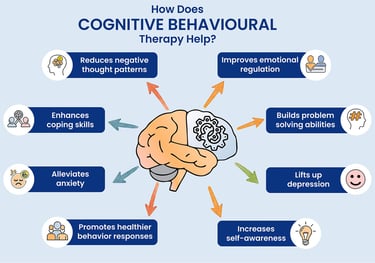
Cognitive Behavioural Therapy (CBT) is a structured, evidence-based approach that focuses on the connection between thoughts, emotions, and behaviours. Using tools such as the ABC model, CBT helps clients understand how activating events influence beliefs and emotional responses. Through guided discovery and cognitive restructuring, individuals learn to identify and challenge unhelpful thinking patterns, including catastrophising, replacing them with more balanced perspectives. CBT also emphasises practical change through behavioural experiments, exposure therapy, and activity scheduling, supporting clients to test fears, reduce avoidance, and re-engage with meaningful activities. Techniques such as mindfulness, physical relaxation, cognitive journaling, and role-playing help strengthen emotional regulation, self-awareness, and coping skills. Rather than focusing on the past, CBT is present-focused and collaborative, aiming to empower individuals with tools they can use beyond therapy to improve wellbeing and resilience.
Psychodynamic Therapy
Psychodynamic therapy is a therapeutic approach that helps people understand how their unconscious thoughts, emotions, and past experiences shape their present behaviour and relationships. Through free association, clients are encouraged to speak openly, allowing hidden feelings and recurring patterns to emerge. The therapeutic relationship itself becomes meaningful, as transference reveals unresolved emotions from earlier relationships that are replayed in the present. Dream analysis offers another pathway into the unconscious, helping explore symbolic meanings linked to fears, wishes, and inner conflicts. Through careful interpretation, the therapist supports clients in making sense of emotions, behaviours, and relational patterns, while the exploration of defence mechanisms helps identify ways the mind protects itself from pain or anxiety. Rather than offering quick solutions, psychodynamic therapy focuses on developing insight, self-awareness, and emotional understanding, enabling lasting psychological change.


Humanistic Therapy
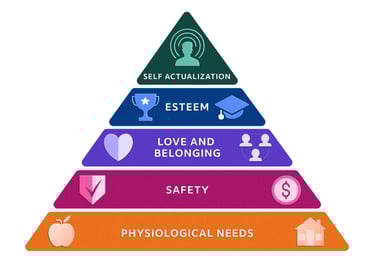
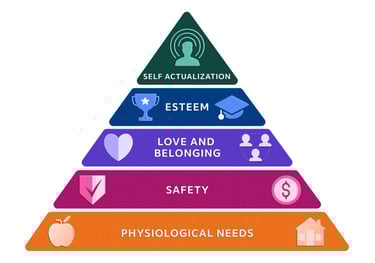
Humanistic therapy is a person-centred approach that views individuals as inherently capable of growth, meaning, and self-direction when given the right conditions. Drawing on Maslow’s hierarchy of needs, humanistic therapy understands psychological distress as often arising when basic needs for safety, belonging, esteem, or meaning are unmet, preventing movement toward self-actualisation—the realisation of one’s full potential. Rather than focusing on pathology, the emphasis is on strengths, values, and the innate drive toward growth. Gestalt therapy, a key humanistic model, complements this by focusing on present-moment awareness, personal responsibility, and the integration of thoughts, emotions, and bodily experience. Through exploring what is happening in the here and now, clients become more aware of unfinished business, internal conflicts, and habitual patterns, allowing for greater authenticity and choice. Together, Maslow’s and Gestalt perspectives frame therapy as a process of increasing awareness, self-acceptance, and alignment with one’s true self, rather than fixing or correcting perceived flaws.
Therapeutic Framework
F2F Therapy
Our face-to-face clinic is based in Earl’s Court, Kensington, just a three-minute walk from Earl’s Court Underground Station, making it easily accessible for clients who prefer in-person therapy. Face-to-face work is best suited to clients who can reliably commit to weekly sessions at the same time, and we ask that commuting time is carefully considered in advance to ensure this is sustainable on a weekly basis. Clients are welcome to arrive shortly before their appointment; however, if you arrive more than 10 minutes early, please wait in one of the nearby cafés, of which there are many in the local area, as the therapy space may still be in use. If a client arrives late, the session will take place for the remaining scheduled time only and will still be charged in full. All sessions are paid in advance, and missed sessions, late arrivals, or cancellations remain chargeable. One reschedule is permitted with at least 72 hours’ notice; any changes made with less than 72 hours’ notice will be charged at the full session fee. This structure helps maintain consistency, fairness, and the therapeutic frame.
Online Therapy
Online therapy is a flexible option well suited to clients who find commuting difficult or prefer to engage in therapy from their own space. To ensure the session remains safe, confidential, and therapeutically effective, clients must have a stable internet connection, a private room, and an environment free from interruptions; children, other adults, or pets should not be present in the room during the session. Online sessions are delivered via Zoom, and clients are responsible for installing the application in advance and joining the meeting 2–3 minutes before the session start time. Clients must ensure their camera is on, positioned so their face is clearly visible, and that sound quality is stable throughout the session. The responsibility for creating and maintaining an online-therapy-appropriate environment rests with the client and must be achievable on a weekly basis. Sessions must not take place in public or semi-public spaces such as cafés, parks, or shared areas, and cars are not suitable environments; driving during a session is strictly not permitted. Clients are also asked to consider their schedule before and after sessions, as therapy can evoke deep emotional material, and it is important to allow time afterward to ground, reflect, and regulate before returning to daily responsibilities.


Session Frequency
Session frequency and therapeutic framework are designed to support consistency, safety, and meaningful progress.
Sessions take place:
on a weekly basis;
on the same day and time each week;
last 50 minutes;
and must be paid in advance to secure the booking.
Unpaid sessions are released and made available to other clients.
One reschedule is permitted with a minimum of 72 hours’ notice—changes requested with less notice remain chargeable.
Therapy is understood as a long-term process, and meaningful outcomes are most likely when clients are able to attend regularly without feeling time- or financially pressured. The effectiveness of therapy depends on multiple factors, including previous therapy experiences, adverse life events, the client’s capacity for self-reflection and accountability, natural curiosity about themselves, and their willingness to implement changes in daily life where needed.
Confidentiality
All sessions are fully confidential, except where there is a serious and immediate risk of harm to the client or others, in which case the therapist has a duty of care to the client and society. Under UK law, children are considered vulnerable, and if information arises indicating a child may be at risk of harm, the therapist has a duty of care toward the child’s wellbeing, with any action taken being proportionate to the level of risk. Therapists have no general legal obligation to contact a GP, social services, the police, or other public bodies unless there is immediate and serious risk, which is always assessed case by case.. Any disclosure will be limited, proportionate, and necessary, and wherever possible, the therapist will seek to discuss concerns with the client before taking action. Confidentiality cannot be used to withhold information where doing so would place the client or others at risk.
Supervision
All therapists work within a professional and ethical framework that requires regular clinical supervision. Supervision is a confidential, professional process that supports safe, reflective, and effective practice.
Clients are never identified by name in supervision; where clinical consultation is required, only initials and anonymised information are used.
The purpose of supervision is to enhance the quality of therapy, ensure ethical practice, and support the therapist’s ongoing professional development.


Client Autonomy & Right to End Therapy
Therapy is a voluntary process that begins and ends on the client’s initiative. Clients have the right to end therapy at any time; however, they are asked to inform the therapist in advance of their intention to finish, so that a safe and supported ending can be facilitated. Sessions are paid in advance and are non-refundable, therefore clients are responsible for ensuring they do not book or pay for sessions they do not intend to attend. The therapist cannot advise the client on when to end therapy, as this decision rests entirely with the client. Payment for sessions is considered an agreement to the therapy terms and conditions.


Collaboration and Working alliance
Therapy is a collaborative process, not advice-giving or directive instruction. The therapist does not tell clients how to live their lives; instead, they offer observations, reflections, and evidence-based psychotherapeutic tools within their training to support insight and wellbeing. Clients have the right to agree or disagree with the therapist’s observations, and if a particular approach does not feel helpful, they are encouraged to discuss this openly. Therapy is an information-based process: the therapist works with what the client chooses to share, trusting the client’s experience as their own frame of reference. The therapist has no obligation to make personal disclosures, and the client remains the primary focus of each session. Any therapist disclosure, if made, is always guided by the therapeutic movement of the session and the client’s needs; the therapist may also choose not to disclose anything, as there is no obligation to do so.
The Nature of the Therapeutic relationship
The therapeutic relationship is a professional, boundaried, and time-limited relationship that exists solely for the purpose of supporting the client’s psychological wellbeing, insight, and development. It is fundamentally different from personal, social, familial, or professional relationships outside the therapy setting. The relationship is asymmetrical by design, meaning the therapist holds professional responsibility for maintaining boundaries, ethical standards, and the therapeutic frame, while the client remains the primary focus of the work. The therapist does not seek emotional support, validation, companionship, or reciprocal disclosure from the client, and the relationship does not extend beyond the agreed therapeutic context.


Transference and Relational Processes
Clients may experience transference within therapy, whereby aspects of the therapist, the therapeutic setting, or specific words or interventions evoke feelings, expectations, or defensive responses connected to past relationships or earlier life experiences. This may include processes such as projection or displacement, where unresolved emotional material influences present perception, reactions, or behaviour. These processes are considered a normal and meaningful part of therapeutic work. Clients are encouraged to share such experiences openly, as therapists are ethically trained to support clients in recognising and working through these patterns. Addressing transference can support insight, emotional regulation, and the disruption of repetitive relational dynamics that negatively impact wellbeing and functioning.


Psychotherapy and Diagnosis
Psychotherapy provided within this practice is non-diagnostic, and the therapeutic frameworks used — Cognitive Behavioural Therapy (CBT), Psychodynamic Therapy, and Humanistic Therapy — are not diagnostic models. Therapy focuses on understanding psychological processes, emotional patterns, relational dynamics, and lived experience rather than assigning clinical labels. However, therapists are trained in psychopathology and have a thorough understanding of mental health conditions, diagnostic criteria, and clinical presentations. Where appropriate, therapists may use psychometric tools and standardised questionnaires as part of assessment and formulation to support understanding and therapeutic direction; these do not constitute a formal diagnosis. In the UK, only specific regulated professionals can make formal mental health diagnoses, most commonly psychiatrists, and in certain contexts HCPC-registered clinical psychologists, mental health nurses, or GPs working within statutory or medical services. General psychologists holding BSc or MSc degrees in Psychology do not have diagnostic authority in the UK. Where diagnostic assessment is clinically indicated, therapists can support clients through referrals for formal diagnostic assessment, and may, with client consent, share professional observations, formulations, and assessment findings with appropriately qualified practitioners to support accurate and informed diagnosis.
Ethical Framework
A dual relationship occurs when a therapist has more than one type of relationship with a client, such as social, personal, professional, financial, or familial, alongside the therapeutic relationship. Dual relationships are not ethically permitted, as they risk compromising professional boundaries, objectivity, confidentiality, and client safety. They can create power imbalances, confusion of roles, and potential harm to the therapeutic process. For this reason, therapists do not engage in friendships, business relationships, supervision exchanges, social interactions, or any other overlapping roles with clients. Maintaining a single, clear therapeutic relationship protects the client, preserves trust, and ensures the work remains focused solely on the client’s wellbeing.
All therapeutic work is delivered within established ethical frameworks and professional standards. Practice is informed by the ethical principles of the British Association for Counselling and Psychotherapy (BACP), the British Psychological Society (BPS), and the British Neuroscience Association. These frameworks emphasise beneficence, non-maleficence, autonomy, justice, integrity, and respect for the dignity of all individuals. Ethical decision-making is guided by these principles, alongside ongoing supervision, reflective practice, and continuing professional development. Where ethical tensions arise, they are managed transparently, proportionately, and in accordance with professional guidance.


Scope and Limitations of Psychotherapy
Psychotherapy is a reflective, relational process designed to support psychological understanding, emotional regulation, and personal development. It is not a substitute for medical care, crisis intervention, legal advice, or social care, nor does it replace external support systems. Therapy may not be suitable for all individuals at all stages, and suitability is considered on a case-by-case basis. Where therapy alone is not appropriate or sufficient, this will be discussed openly, and alternative or additional sources of support may be recommended.
Therapy operates on a shared responsibility model. The therapist is responsible for maintaining ethical practice, professional boundaries, and a safe therapeutic frame, while the client is responsible for engaging honestly, attending sessions as agreed, and seeking additional support where required. Risk is assessed dynamically and contextually, based on information shared within sessions.
Therapy is not static. The therapeutic process may be reviewed periodically to ensure it remains appropriate, effective, and aligned with the client’s needs and goals. Clients are encouraged to reflect on their experience of therapy and raise any concerns about pace, focus, or approach.
Therapy is not intended to create dependency, but to support increasing autonomy, resilience, and the capacity to live meaningfully beyond the therapy space.


Crisis Interventions and Emergency
Psychotherapy is not a crisis intervention service. This means that therapy is appropriate for clients who are able to tolerate the time between sessions and manage periods of distress without immediate professional intervention. Therapy is designed to support reflection, insight, and emotional processing within scheduled sessions, and it is not intended to manage acute crises that require immediate or specialised response. If a client experiences a mental health crisis, immediate support should be sought through appropriate services such as Samaritans, local crisis centres (available via each London council’s website), NHS 111, or 999 for emergency services where there is immediate risk to life. The therapist may support the client in identifying the most appropriate crisis resources and discussing when and how to use them; however, accessing crisis support during a crisis remains the client’s responsibility. Therapy cannot replace emergency or crisis services, and attempting to use therapy in place of such support may compromise client safety.
Contact outside the therapy room
The therapeutic relationship is contained within the therapy setting, and clear agreements apply to any accidental or unavoidable contact outside the therapy room, such as meeting in public spaces. Clients have the right to specify their preference, including requesting that the therapist does not acknowledge them in any way, or that a brief, neutral nod may be exchanged. The therapist will never initiate contact outside sessions and will not indicate in any way that they work with the client. If the client chooses to approach the therapist in public, any interaction will remain minimal, professional, and non-disclosing. A complete no-contact agreement outside sessions is fully respected and does not negatively affect the therapeutic relationship. This boundary also applies to birthdays, holidays, and personal occasions; the therapist will not send greetings or acknowledgements, as these are part of personal rather than professional relationships. Clients are welcome to explore their experiences of holidays, celebrations, or significant dates within therapy sessions if they wish.


Social Media and Online presence
Therapists will not view, monitor, or engage with a client’s personal social media accounts, and will never send or accept friend or follow requests on personal platforms. This boundary exists to protect client privacy and maintain the integrity of the therapeutic relationship. Any therapist social media presence is strictly professional, and clients may choose to follow professional platforms at their own discretion. Social media communication is not used for therapeutic work and, where permitted, may only be used for brief administrative communication, such as scheduling or practical arrangements. There is no expectation or obligation for clients to engage with a therapist’s online presence, and non-engagement has no impact on therapy.


Contact
info@inclusimind.co.uk
+44 20 8156 6686
© 2024. All rights reserved.